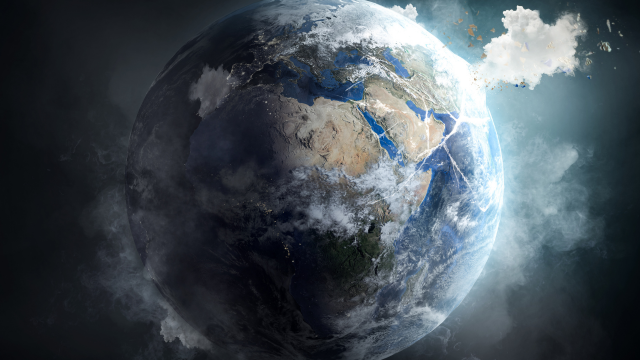













The pace of changes in the planet's climate has no precedent in the history of civilization. The UN has recognized that climate change is a threat to human security. Potential links between natural hazards or scarcities and conflict have been publicly declared by political officials and made their way into international forums such as the Rio Declaration on Environment and Development, the European Security Strategy, and the UN High Level Panel on Threats, Challenges, and Change. The Mediterranean, Middle East and the Sahel are among the regions in the world most exposed and vulnerable to floods and droughts. Will climate change undermine human security in the region by intensifying water hazards?
This was the complex question our research project, CLICO, set to answer. We know from past research that climate extremes do not automatically cause disasters, conflicts or migration. Social factors often matter more than environmental. Our desire was to understand better the links between climate, water, violence, conflict and human security. The CLICO project mobilized 14 research teams and brought together for the first time some of the world's leading researchers in water resource, vulnerability, and peace and security studies. Eleven cases of areas where droughts or floods pose threats to human security were studied ranging from Niger, Sudan, the Jordan and Nile basins to Cyprus, Italy and the Sinai desert. A large dataset – the first of its kind – of domestic hydro-conflicts in the Mediterranean, Middle East and Sahel was regressed against climatic, hydrological and socio-economic variables. The resilience of international treaties in the region to deal with climatic variability was assessed and national and international policies were evaluated.
After three years of intense research, we are proud to share with you the fruits of our labour!
In brief, we did not find evidence that hydro-climatic variation is an important source of violence and insecurity, neither at the transboundary nor the domestic level. Democracy and good institutions emerged as the most important variables for human security. Whereas violent conflict is not the result of hydro-climatic hazards, we did find that violence does make the populations affected by it most vulnerable to hazards. We also found that large-scale State-led development projects, often pursued in the name of adaptation to climate change, end up increasing the insecurity of some groups of the population, often the ones who are most marginalized economically and politically. Strong and well-functioning social security systems appear to be an important instrument for human security in the face of climatic risks.
These and many, many other findings and insights you will find in this website. If you want to take a quick glance at our results you can look at our press brief and the summaries of our studies. If you want to get a more detailed look at our results, you can read our synthesis report or visit the “research” page, where we have uploaded all reports from the several individual studies conducted under CLICO. Our policy messages are summarized in the “press brief” as well as in a series of targeted “policy briefs”. In the policy section, you will find also guidelines for international policy-makers or for the designers of international water treaties.
We are delighted to welcome you to CLICO website and we hope you will find this research as exciting as we did!
Giorgos Kallis (Project Coordinator) and Christos Zografos (Research Coordinator
Financial contributors